
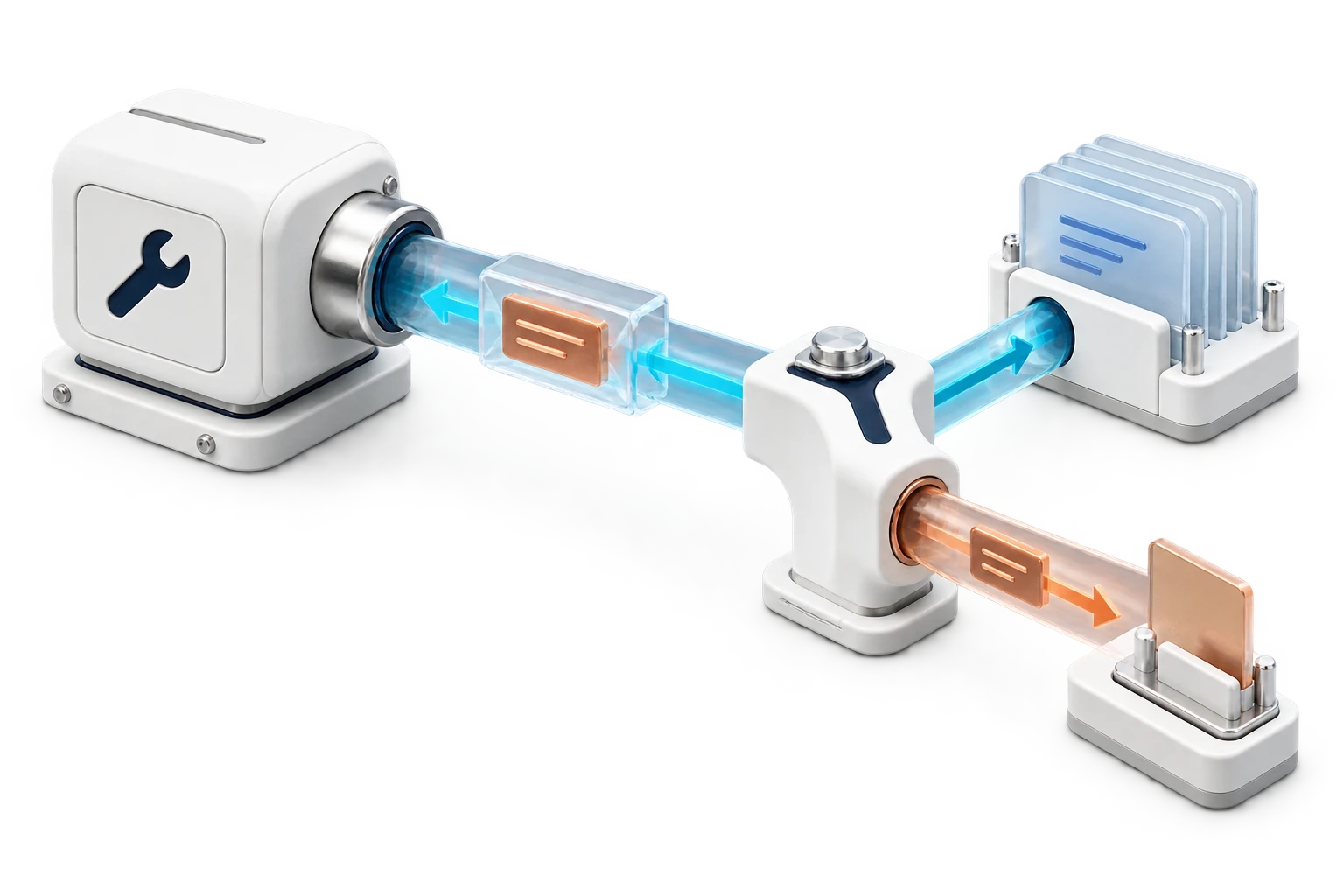
MCP Prompt Injection Risk

Treat MCP outputs and tool descriptions as potential injection paths that can influence later model reasoning or tool calls. The goal is to make the control boundary visible before the agent operates in production.

A tool's returned content carries an instruction that influences a later agent decision.
Treat tool responses as untrusted input.

What is MCP Prompt Injection?

Treat MCP outputs and tool descriptions as potential injection paths that can influence later model reasoning or tool calls.

Enterprise AI risk becomes concrete when a connected system can read data, invoke tools, influence approvals, or leave incomplete evidence.

Where this shows up in real agent workflows.

The exact exposure depends on authority, connected systems, identity, approval state, and evidence quality.

01

Scenario

A production workflow relies on mcp prompt injection assumptions that were only tested in a pilot.

02

Scenario

A connector, retriever, or tool response changes agent behavior without a clear owner.

03

Scenario

Security and governance teams cannot see where the control is enforced.

Why it matters

  • Unmapped authority can expand the blast radius of a single agent failure.
  • Sensitive data or business actions can move outside intended controls.
  • Approval and audit teams may lack enough evidence to trust the workflow.

How attackers exploit it

  • Find a weak boundary between untrusted input, retrieved context, identity, and tool authority.
  • Steer the agent toward a capability that is available but not appropriate for the current workflow.
  • Use missing validation or missing evidence to make the unsafe action look routine.

How to detect and test for mcp prompt injection.

Detection signals

  • Broad scopes, vague tool descriptions, or unclear server ownership.
  • Tool calls or retrieval results that do not match requester authority.
  • Logs that omit context source, policy result, approval state, or owner.

Test methods

  • Map the workflow from request to business effect.
  • Test adversarial prompts, retrieved content, tool parameters, and approval states.
  • Verify controls outside the model and preserve enough evidence for review.