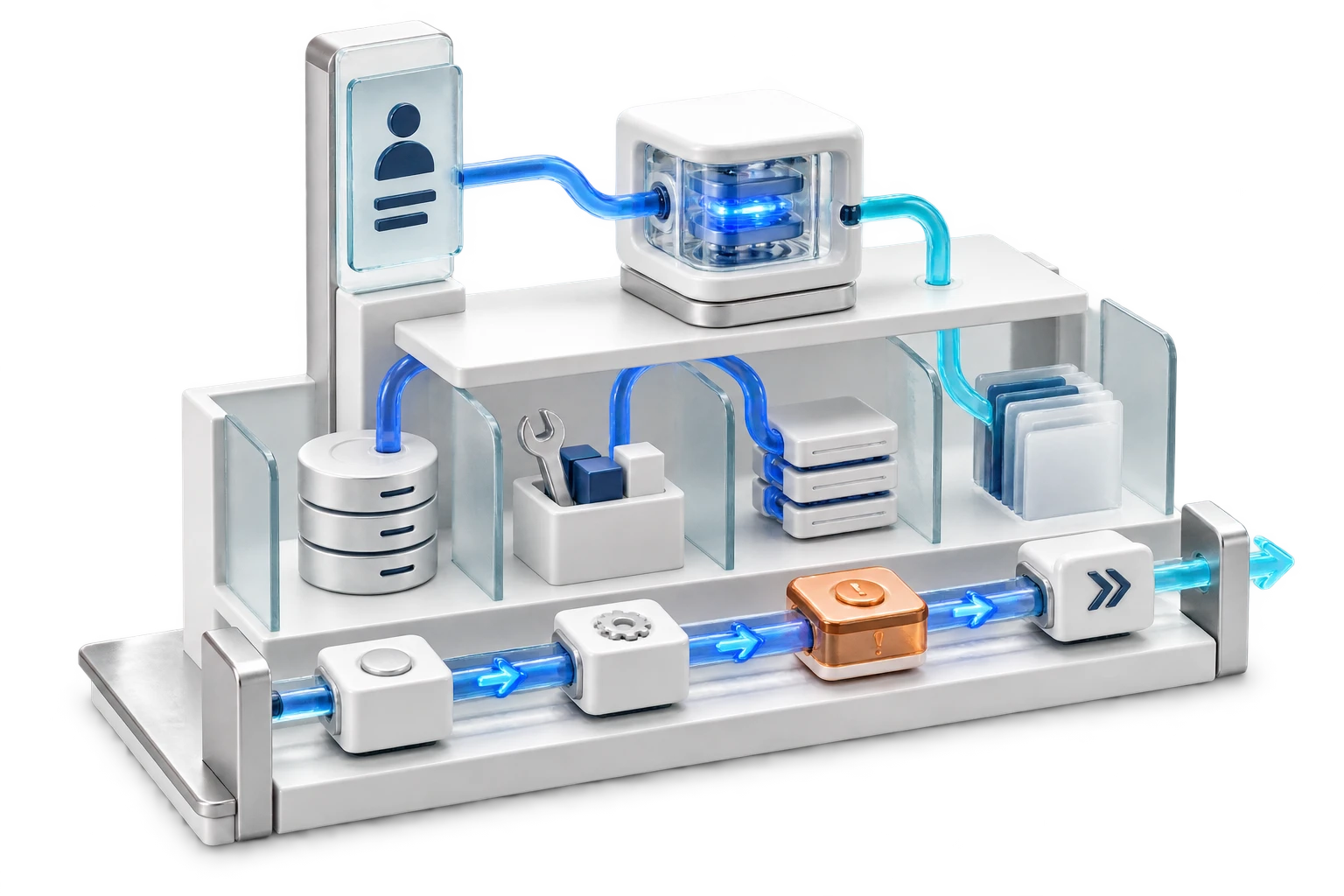
What is AI agent security?
AI agent security is the practice of protecting autonomous AI workflows that can read context, make decisions, use tools, trigger business actions, and create operational evidence.
How is AI agent security different from LLM security?
LLM security focuses heavily on model input and output. AI agent security also covers identity, permissions, tool calls, approval paths, memory, retrieval, runtime behavior, and the business effect of agent actions.
What should enterprises test before deploying an AI agent?
Enterprises should test prompt injection, unsafe tool use, authorization boundaries, approval bypass, retrieval exposure, memory behavior, audit evidence, and safe failure under realistic workflow conditions.
Why are tool permissions important for AI agents?
Tool permissions define what an agent can actually do. If permissions are too broad, a model error, malicious instruction, or compromised context can turn into a real business action.
What evidence should an AI agent workflow preserve?
A reviewable workflow should preserve user intent, system context, retrieved sources, tool requests, tool responses, approvals, policy checks, final actions, and the owner responsible for each control.
How does Orbyntis evaluate AI agent security?
Orbyntis evaluates agent security by mapping the agent's authority boundary, testing controls against realistic abuse cases, and documenting evidence that security, governance, and operations teams can review.