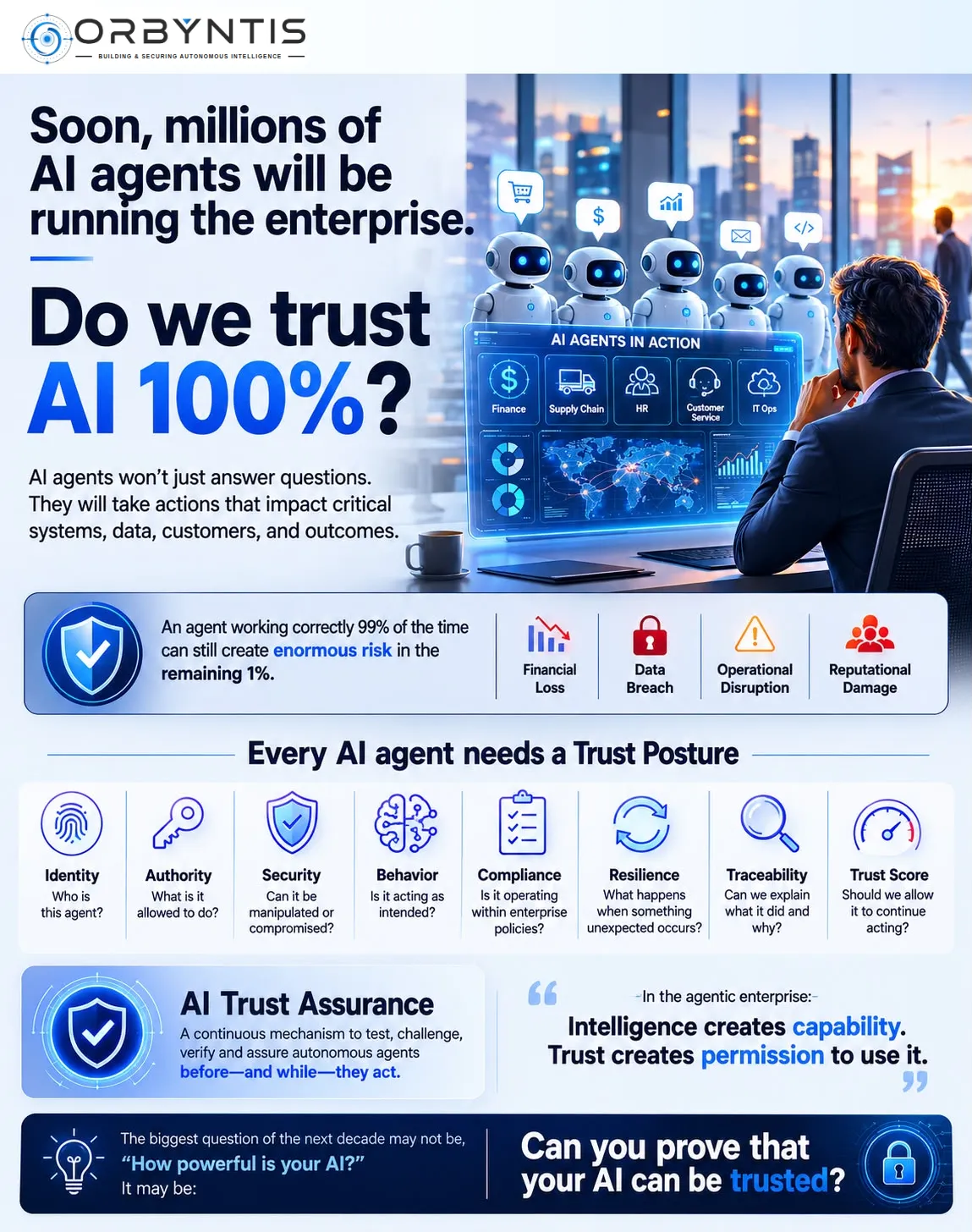
Soon, millions of AI agents will be running the enterprise.
But here is the uncomfortable question:
Do we trust AI 100%?
We are rapidly moving toward a world where AI agents will not just answer questions.
They will take actions.
They will create purchase orders. Approve transactions. Change ERP data. Talk to customers. Trigger workflows. Write and deploy code. Interact with other agents. And increasingly, make decisions without a human watching every step.
The industry is spending enormous energy asking:
How intelligent is the agent?
But enterprises will soon be asking a much more important question:
How trustworthy is the agent?
Because an agent working correctly 99% of the time can still create enormous risk in the remaining 1%.
And trust cannot simply mean:
We tested the model before deployment.
Enterprise AI will need something closer to a continuous trust assurance layer.
Every Agent Needs a Measurable Trust Posture
Every production AI agent should have a measurable trust posture.
That posture should answer practical enterprise questions:
- Identity: Who is this agent?
- Authority: What is it allowed to do?
- Security: Can it be manipulated or compromised?
- Behavior: Is it acting as intended?
- Compliance: Is it operating within enterprise policies?
- Resilience: What happens when something unexpected occurs?
- Traceability: Can we explain what it did and why?
- Trust Score: Should we allow it to continue acting autonomously?
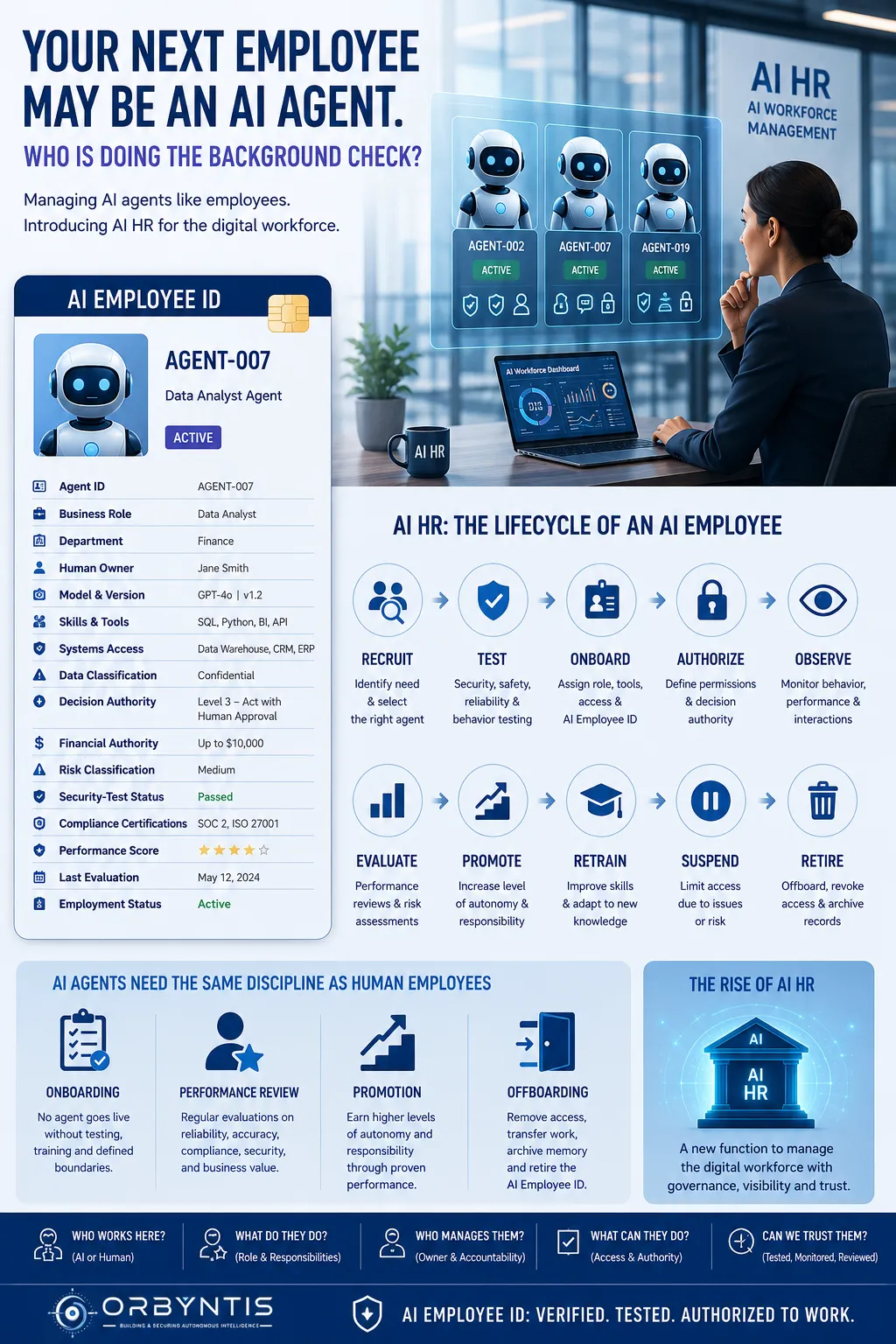
Today, we authenticate employees before giving them access to enterprise systems.
Tomorrow, we may need to do something similar for AI employees.
Before an agent receives authority to move money, modify ERP systems, communicate with customers, or instruct another agent, enterprises need confidence that it remains trustworthy.
AI Trust Assurance Is Emerging
This points toward an emerging enterprise category:
AI Trust Assurance
Not another AI monitoring dashboard.
A continuous mechanism to test, challenge, verify, and assure autonomous agents before and while they act.
Because in the agentic enterprise:
Intelligence creates capability. Trust creates permission to use it.
And the biggest question of the next decade may not be:
How powerful is your AI?
It may be:
Can you prove that your AI can be trusted?